A Complete Guide to the Accordion
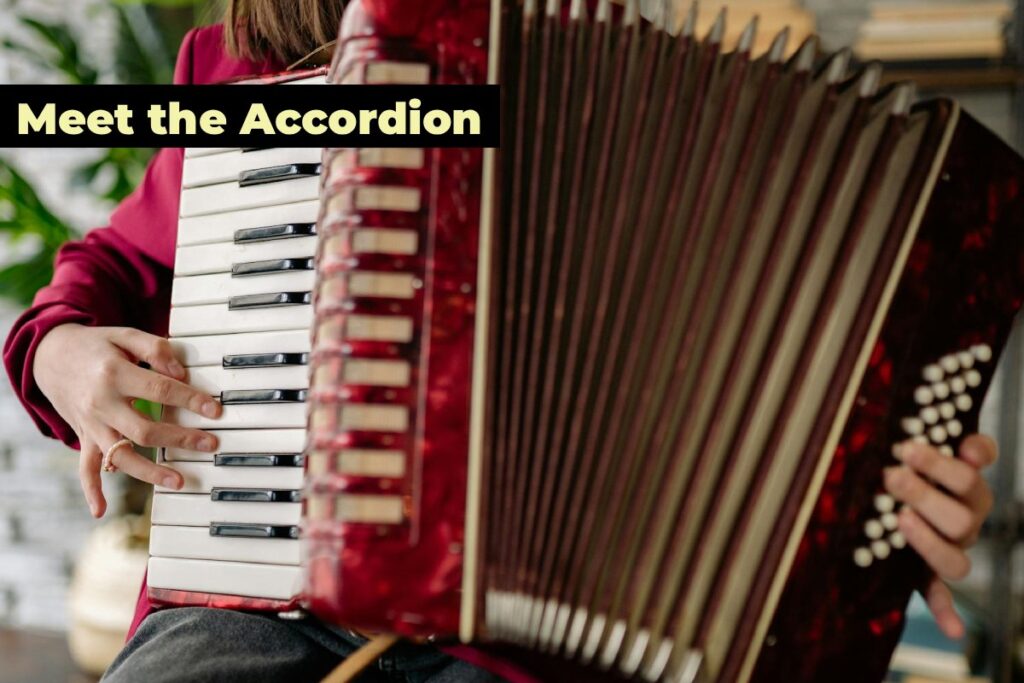
Meet the Accordion
Few musical instruments carry as much cultural richness, global presence, and sonic versatility as the accordion.
From the romantic streets of Paris to the lively dance halls of Buenos Aires, this remarkable squeezebox has earned a permanent place in music history.
The accordion blends melody and accompaniment into one portable instrument, making it unique among all wind instruments.
Today, the accordion appears in folk, classical, jazz, zydeco, tango, Cajun, norteño, and even rock music.
Its distinctive bellows-driven sound captures emotions that other instruments cannot easily replicate.
Whether you are a curious beginner or an experienced musician, understanding the accordion opens a door to one of the richest musical traditions in the world.
This guide answers every important question about the accordion. It covers its history, how it works, its many types, who plays it, what it costs, and much more.
Read on to discover everything you need to know about the fascinating world of accordion music.
What Is an Accordion?
The accordion is one of the most recognizable and expressive musical instruments in the world.
It belongs to the free-reed aerophone family, which means it produces sound when air flows past a vibrating metal reed inside a frame.
Close your eyes and imagine the lively sound of a French street musician or a spirited polka band. Chances are, an accordion sits at the center of that mental picture.
Formally, the accordion is a portable, box-shaped instrument.
It features a treble section on the right side with keys or buttons, a bass section on the left side with buttons, and a folding bellows that connects both sides.
The player straps the instrument to the chest and uses both hands simultaneously. The right hand plays melody notes while the left hand plays bass chords.
The word “accordion” traces back to the 19th-century German term Akkordeon. This German word comes from Akkord, which means “musical chord” or “concord of sounds.”
That name is fitting for an instrument capable of playing full chords, melodies, and bass lines all at once.
Today, musicians around the world use the accordion in folk, classical, jazz, tango, and many other genres.
| The accordion is classified under the Hornbostel-Sachs system as a free-reed aerophone, placing it in the same broad family as the harmonica, concertina, and bandoneon. |
Accordions are also called squeezeboxes in informal conversation. This nickname perfectly captures the physical action of playing the instrument.
Musicians compress and expand the bellows to pump air across the reeds, which then vibrate to create distinct and sustained musical notes.
Few instruments can match the accordion’s ability to sustain sound over extended musical phrases.
The History of the Accordion: From Ancient Roots to Modern Stage
Ancient Inspirations and Early Free-Reed Instruments
The accordion’s story did not begin in 19th-century Europe. Its roots stretch back thousands of years to ancient Southeast Asia.
Early civilizations in that region played a free-reed instrument called the sheng, or cheng.
This ancient instrument dates back to approximately 2700 BCE and is considered one of the earliest known instruments to use a free-vibrating reed.
The sheng consisted of bamboo pipes, a resonator box, a wind chamber, and a mouthpiece.
Players blew air through the mouthpiece to vibrate the reeds inside the bamboo pipes.
The instrument traveled from Asia to Europe in 1777, when a French Jesuit missionary named Pere Amiot introduced it to European audiences.
That single introduction sparked an era of remarkable musical experimentation.
European instrument makers became fascinated by the concept of free-reed vibration. Inventors began experimenting with new designs that applied this principle to portable bellows-driven instruments.
These experiments eventually produced the direct predecessors of the modern accordion. The journey from the ancient sheng to the accordion represents centuries of gradual musical evolution.
The Birth of the Modern Accordion
In 1822, a German instrument maker named Christian Friedrich Ludwig Buschmann took a major step forward. He invented and patented a portable instrument in Berlin called the Handaeoline.
This device featured an expandable bellows, a portable keyboard, and a series of free-vibrating reeds inside.
However, the Handaeoline lacked the chord-playing ability that would define the true accordion.
Seven years later, in 1829, an Armenian-born organ maker named Cyrill Demian working in Vienna transformed the concept significantly.
Demian added four bass keys to the instrument, allowing players to produce full chords with one hand.
He was then awarded a patent for this improved design. Importantly, Demian named his invention the akkordeon, which directly gives us the modern word “accordion.”
Demian’s design used the Italian word accordare, meaning “to sound together,” as inspiration. His version consisted of several rows of buttons that produced a variety of harmonies.
This allowed players to create both complex musical textures and simple folk rhythms. His accordion quickly spread across Europe, attracting growing interest from both musicians and manufacturers.
| The accordion’s formal name was first recorded in Cyrill Demian’s 1829 Vienna patent, making it one of the few musical instruments whose naming moment is precisely documented in history. |
Growth, Refinement, and the Golden Age
After Demian’s 1829 patent, manufacturers across Europe refined and improved the accordion significantly.
German, French, Russian, Swedish, and American versions all emerged from Demian’s original model.
Each version varied in size, number of keys, reed configuration, and tonal quality. Italian manufacturers in particular became central to the accordion’s global development.
The city of Castelfidardo in Italy became the world’s epicenter of accordion manufacturing.
Leading companies such as Excelsior, Pigini, Victoria, Castagnari, Brosini, Scandalli, and Zero Sette all established operations there.
Italian craftsmanship refined the accordion’s shape and construction, producing instruments known for their durability, quality, and beautiful tonal range.
The piano accordion appeared around the mid-19th century. One source credits Bouton of Paris with introducing it in 1852.
Another source attributes its public debut to instrument builder Matthaus Bauer in 1854 at the Allegemeine Deutsche Industrieausstellung in Munich.
Regardless of the exact date, the piano accordion quickly became a serious competitor to the earlier button-based models.
The early twentieth century marked what historians call the Golden Age of the Accordion.
This period, running roughly from 1900 to the 1960s, saw the instrument reach extraordinary popularity.
Jazz, dance, swing, and folk bands all featured the accordion prominently.
Gene von Halberg, Joe Biviano, and Abe Goldman performed at Carnegie Hall in 1939, bringing the accordion to one of America’s most prestigious venues.
Anatomy of the Accordion: How It Is Built
The accordion is a fascinating instrument, both in sound and structure.
At first glance, it may appear complex, but its design is a carefully engineered system that combines airflow, mechanics, and musical precision.
The instrument is made up of several interconnected parts that work together to produce its distinctive sound.
Understanding how an accordion is built not only deepens appreciation for its rich sound but also helps players better control and maintain the instrument.
Every standard accordion has three primary sections. These are:
- The treble end
- The bellows
- The bass end
Each section plays a distinct and essential role in producing the instrument’s characteristic sound.
Understanding these three components helps players appreciate how the accordion functions as a unified musical system.
The Treble End (Right-Hand Side)
The treble section sits on the right side of the instrument. It contains the melody keyboard, which may be a piano-style keyboard or a set of round buttons, depending on the accordion type.
This section also houses a set of reed blocks, each containing free metal reeds tuned to specific pitches.
When the player presses a key or button on the treble side, a pallet valve opens inside the reed block. This allows air to rush past the corresponding reed and cause it to vibrate.
That vibration produces a specific musical note. The treble side typically covers a range of several octaves and handles all the melodic content of the music.
Register switches on the treble side allow the player to change the instrument’s “voice.” Each switch activates a different set of reeds, altering the timbre of the sound.
Some registers produce a bright, reedy tone while others create a warmer, fuller sound. Advanced accordions can have up to six reed blocks, each offering a different octave or tonal coloring.
The Bellows
The bellows is the folding, expandable middle section of the accordion. It connects the treble and bass ends and acts as the instrument’s air pump.
When the player pushes the bellows together, air flows outward through the reeds. When the player pulls the bellows apart, air flows inward through a different set of reeds.
Skilled accordionists treat the bellows like a bow on a violin. The speed, pressure, and direction of bellows movement all affect the sound’s dynamics and expression.
A slow, steady bellows movement produces a gentle, even tone. A sharp, forceful movement creates a strong accent or attack. Therefore, bellows control is one of the most important skills an accordionist develops.
The bellows is made from layered cardboard and fabric with metal corner reinforcements. High-quality bellows maintain airtightness over many years of playing.
Regular maintenance helps preserve the bellows’ flexibility and prevents air leakage that could affect tuning and tone quality.
The Bass End (Left-Hand Side)
The bass section sits on the left side of the instrument. It contains rows of round buttons rather than piano-style keys.
These buttons control the bass notes and pre-set chord combinations. The standard Stradella bass system, used on most modern accordions, includes up to 120 buttons arranged in six rows.
Each row in the Stradella system serves a specific function. The first two rows play single bass notes. The remaining four rows play major, minor, seventh, and diminished chords.
This layout allows the player to produce full harmonic accompaniment with just one finger or thumb. Additionally, register switches on the bass side offer tonal variations for the bass notes.
| The Stradella bass system, named after the Italian composer Alessandro Stradella, remains the most widely used left-hand layout on accordions worldwide. |
How the Accordion Produces Sound
The accordion is a unique musical instrument whose sound is created through a combination of airflow, mechanical action, and finely tuned components.
Unlike string or percussion instruments, it relies on the movement of air to generate its rich, expressive tones.
Understanding how the accordion produces sound helps players appreciate its design and develop better control over their performance.
At the core of sound production is the bellows, which functions like a set of lungs. When the player pushes or pulls the bellows, air is forced through the instrument.
This airflow is essential, as no sound is produced without it.
As the bellows move, the player presses keys or buttons. Each key or button opens a small valve inside the accordion, allowing air to pass through a specific set of reeds.
These reeds are thin metal strips that vibrate when air flows across them. The vibration of the reeds produces sound, with each reed tuned to a particular pitch.
The direction of the bellows movement, pushing or pulling, can also influence the sound in some types of accordions, especially diatonic ones, where different notes may be produced depending on the direction of airflow.
The Free-Reed Mechanism
At the heart of the accordion’s sound is the free-reed mechanism. Because of its unique method of generating tones, the accordion sits firmly within the free-reed aerophone category.
Inside the instrument, the mechanical magic happens on metal plates where small metal tongues, known as reeds, are precisely mounted.
Each reed is slightly longer than the slot it sits above and is tuned to vibrate at a specific pitch when air passes over it.
When air flows over a reed from one direction, the reed bends through its slot and vibrates above the frame. This vibration creates a sound wave at a precise frequency, producing a specific musical note.
Airflow in the opposite direction does not cause that particular reed to vibrate. Instead, a separate reed positioned to respond to the opposite airflow direction handles that function.
This is why single-action accordions produce different notes depending on whether the bellows moves inward or outward.
Double-action accordions, by contrast, have two reeds per key tuned to the same note. Therefore, each key produces the same pitch regardless of bellows direction.
Most modern piano accordions use the double-action system for greater playing convenience.
Single-Action vs. Double-Action Accordions
An important aspect of how sound is produced lies in the difference between single-action and double-action accordions.
In single-action accordions (also known as diatonic accordions), different notes are produced depending on whether the bellows are pushed in or pulled out.
This means one button can create two distinct sounds, giving the instrument a rhythmic, bouncy character often heard in folk music.
This design is characteristic of the diatonic button accordion. It is more compact and well-suited to playing in a specific musical key or set of keys.
Traditional folk music styles around the world often use single-action instruments.
In contrast, double-action accordions also called unisonoric instruments (commonly chromatic or piano accordions), produce the same note regardless of whether the bellows are pushed or pulled.
This allows for smoother, more consistent playing and makes it easier to perform complex melodies across different musical styles.
This makes them easier to use across multiple keys and musical styles. The piano accordion is the most common example of a double-action instrument.
Types of Accordions: A Complete Overview
The accordion family is diverse and includes many distinct types. Each type has a unique design, playing system, and tonal character.
Choosing the right accordion depends on the player’s musical style, experience level, and personal preference. Below is a thorough guide to the major types of accordions.
1. Piano Accordion
The piano accordion is the most widely recognized type of accordion worldwide.
It features a standard piano-style keyboard on the right-hand side, making it familiar to players who already know the piano.

The keyboard typically covers three to four octaves and plays all twelve chromatic notes.
On the left side, the piano accordion uses the Stradella bass system with up to 120 buttons.
This combination of piano keys and bass buttons makes the piano accordion one of the most versatile instruments for playing melody, harmony, and rhythm simultaneously.
Consequently, it suits a wide range of musical genres, from folk and pop to classical and jazz.
The piano accordion became the official city instrument of San Francisco, California. It is also one of the leading solo instruments in Argentine tango orchestras.
Furthermore, it appeared at famous venues like Carnegie Hall, where it gained recognition as a serious concert instrument in the 20th century.
2. Diatonic Button Accordion
The diatonic button accordion, sometimes simply called the diatonic accordion, uses buttons rather than piano keys on the treble side.
It is a single-action (bisonoric) instrument, meaning the push and pull of the bellows produce different notes for the same button. This makes it ideal for playing music in specific keys.

Different versions of the diatonic accordion are tuned to different keys. Common tuning systems include one-row, two-row, and three-row configurations.
Each row covers a different scale or key, giving the player access to multiple musical keys without changing instruments.
This accordion type is popular in Irish traditional music, Cajun music, Mexican norteño music, and many other folk traditions.
The diatonic accordion is generally lighter and more compact than the piano accordion.
These characteristics make it particularly popular among street musicians and those who perform while moving or dancing.
Its bright, punchy sound also suits fast-paced dance music and energetic folk performances.
3. Chromatic Button Accordion
The chromatic button accordion features a right-hand side with rows of round buttons arranged in a chromatic pattern.
Unlike the diatonic accordion, the chromatic version plays all twelve semitones of the musical scale. This means the player can perform music in any key without retuning the instrument.

Two major chromatic button systems exist: the B-system and the C-system. These systems differ in the layout of the buttons, and musicians often develop strong preferences for one system or the other.
The chromatic button accordion is particularly popular in Russia, Eastern Europe, and Scandinavia, where it has a long and deep musical tradition.
Classical accordionists often prefer the chromatic button accordion for its compact layout and wide range. The button system allows the player’s fingers to reach more notes with less hand movement.
This makes it technically efficient for fast passages and complex classical compositions. Virtuoso performers frequently choose this instrument for concerto and solo recital settings.
4. The Bayan
The bayan is a Russian type of chromatic button accordion with a powerful, deep tone.
It uses the B-system button layout on the right hand and typically features the Stradella bass system on the left hand.

Some advanced bayan models also include a free-bass system that allows for more complex classical and contrapuntal playing.
The bayan has a particularly strong presence in Russian and Eastern European classical music.
Composers from those regions have written demanding solo concertos and chamber works specifically for the bayan.
Its rich, full-bodied sound makes it suitable for both delicate lyrical playing and powerful, dramatic musical passages.
Professional bayan players invest years of dedicated study to master the instrument’s technical demands.
Russian music conservatories have long offered bayan as a formal academic discipline, treating it with the same seriousness as the violin or piano.
This tradition has produced many world-class bayan virtuosos over the decades.
5. The Bandoneon
The bandoneon is a close relative of the accordion, though it looks and feels quite different.
It is a square-shaped, bisonoric free-reed instrument invented by Heinrich Band in Krefeld, Germany, during the mid-1840s.
The instrument produces different notes depending on whether the player opens or closes the bellows.

The bandoneon has no keyboard. Instead, it uses buttons on both sides of the bellows to control notes and chords. The button layout is complex and requires significant memorization.
Despite this challenge, the instrument is beloved for its hauntingly expressive sound and emotional depth.
The bandoneon holds a legendary status in Argentine tango music. Legendary composer and performer Astor Piazzolla used the bandoneon to transform traditional tango into a sophisticated new art form called nuevo tango.
Piazzolla incorporated elements of jazz and classical composition into his tango works, forever elevating the instrument’s musical prestige worldwide.
6. The Concertina
The concertina is another instrument in the broader accordion family, though it is distinctly smaller and hexagonal in shape. Like the accordion, it uses a bellows mechanism to pump air across free reeds.
However, the concertina has buttons on both sides and lacks the chord-producing bass system found in standard accordions.

Two major types of concertinas exist: the English concertina and the Anglo-Germanic concertina.
The English concertina is unisonoric, meaning the same button produces the same note on both push and pull.
The Anglo-Germanic concertina is bisonoric, similar in behavior to the diatonic button accordion.
The concertina is strongly associated with Irish traditional music and English folk music. It is also used in South African folk music, where it developed a unique local style.
Despite its smaller size, the concertina can produce a surprisingly full and expressive sound that carries well in both indoor and outdoor settings.
7. The Ukulele Bandoneon and Other Hybrid Types
Modern instrument makers have also developed hybrid accordion types that combine traditional reed technology with electronic components.
These digital or MIDI-equipped accordions allow players to connect the instrument to synthesizers, computers, and sound modules.
The result is an extraordinarily wide range of timbres beyond the standard accordion sound. MIDI-equipped accordions use sensors attached to each key or button.
These sensors detect when the player presses a note and transmit a corresponding signal to the connected device.
This technology allows the accordion to sound like a piano, organ, strings, or any other synthesized instrument.
Consequently, it has become a popular tool for studio musicians and experimental performers.
The Accordion in World Music and Culture
The accordion is more than just a musical instrument, it is a cultural symbol that has traveled across continents and adapted to countless musical traditions.
From lively folk dances to sophisticated concert halls, the accordion has earned a place in diverse musical landscapes around the world.
Its portability, expressive range, and ability to produce both melody and harmony make it a powerful tool for cultural expression and storytelling.
Europe: The Heartland of Accordion Tradition
Europe is the birthplace of the accordion, and the instrument remains deeply embedded in the folk and popular music of many European nations.
In France, the accordion defines the musette style, a genre of Parisian café music characterized by its lilting waltz rhythms and bright, slightly reedy tone.
French musette music became internationally associated with Parisian street culture throughout the 20th century.
In Germany and Austria, the accordion plays a central role in traditional folk dance music, including polka and landler.
German brass bands and folk ensembles frequently feature the accordion alongside other traditional instruments.
Similarly, in Scandinavia, the accordion accompanies traditional dances and folk tunes in Norway, Sweden, and Finland.
Eastern Europe and Russia have developed particularly deep accordion traditions.
In Bosnia and Herzegovina, the accordion is the dominant instrument in sevdalinka, a distinctive and emotionally intense style of traditional folk music.
Russian musical culture treats the bayan, their version of the chromatic button accordion, with deep respect and seriousness.
Latin America: Tango, Forró, and More
The accordion found a passionate home in Latin America after European immigrants brought it to the continent in the 19th century.
German and Italian settlers introduced the instrument to Brazil, particularly in the southern states of Rio Grande do Sul, Santa Catarina, and Parana.
From there, it became central to the forró music of Brazil’s northeastern region.
In Argentina and Uruguay, the bandoneon became the voice of tango music.
Astor Piazzolla’s nuevo tango compositions brought international fame to both the bandoneon and the accordion through their sophisticated blending of tango, jazz, and classical elements.
His recordings and compositions remain among the most performed accordion-related works in the world today.
In Colombia, the accordion drives the vallenato style, a beloved national music genre that earned UNESCO Intangible Cultural Heritage status.
Mexican norteño and Tex-Mex conjunto music also rely heavily on the accordion. Texas-born accordionist Flaco Jimenez has won multiple Grammy Awards for his pioneering work in the Tejano and conjunto traditions.
North America: Jazz, Cajun, and Zydeco
In the United States, the accordion found particular strength in Louisiana’s Cajun and Zydeco music traditions.
Cajun music blends French Acadian, Native American, and Creole influences, with the diatonic accordion serving as its primary melodic voice.
Clifton Chenier, known as the King of Zydeco, used the piano accordion to drive the energetic, blues-influenced Zydeco sound.
Jazz musicians in the United States also embraced the accordion during the early 20th century.
The instrument appeared in jazz, dance, and swing bands during the Golden Age of the Accordion.
Richard Galliano, a French accordionist, later helped revive accordion jazz internationally with his sophisticated blend of French musette, classical, and jazz styles.
Popular American musicians have also used the accordion in rock and novelty music.
Grammy Award-winning parodist Weird Al Yankovic plays the accordion on many of his tracks, particularly his polka compositions.
Rock bands like They Might Be Giants and the Dropkick Murphys have also featured the accordion in their recordings and live performances.
The Accordion in Classical Music
The accordion’s reputation in classical music grew steadily throughout the 20th century.
Renowned composers including Peter Ilyich Tchaikovsky, Dmitri Shostakovich, Roy Harris, and Alban Berg incorporated the accordion into their classical compositions.
French composer Henri Dutilleux used the accordion in both of his late song cycles, Correspondences (2003) and Le Temps L’Horloge (2009).
Russian-born composer Sofia Gubaidulina wrote solos, concertos, and chamber works specifically for the accordion.
These compositions helped establish the instrument’s credibility in serious concert music.
Today, leading conservatories, including the Royal Academy of Music in London, offer the classical accordion as a formal academic discipline.
Legendary Accordionists Who Shaped the Instrument
The accordion has evolved into a powerful and expressive instrument largely due to the creativity and innovation of great musicians who pushed its boundaries.
Across different eras and musical styles, legendary accordionists have elevated the instrument from a folk accompaniment tool to a respected solo and concert instrument.
Through a blend of technical mastery and relentless dedication, these artists have redefined how the world perceives and plays the accordion.
Their contributions span multiple genres and continents, elevating the accordion from its folk origins into a powerful vehicle for serious artistic expression.
Astor Piazzolla (1921-1992)
Argentine composer Astor Piazzolla is perhaps the most influential figure in the history of the bandoneon and accordion.
He transformed traditional tango into a sophisticated new genre called nuevo tango by blending tango rhythms with jazz harmonies and classical counterpoint.
His compositions, including Libertango and Oblivion, are now performed on accordions worldwide.
Richard Galliano (Born 1950)
French accordionist Richard Galliano has brought the accordion to the forefront of international jazz.
His repertoire ranges across jazz, tango nuevo, Latin, and classical styles.
He is widely regarded as one of the most influential jazz accordionists of the modern era and has collaborated with leading jazz musicians from around the world.
Clifton Chenier (1925-1987)
Clifton Chenier is considered the King of Zydeco music.
His powerful, blues-driven accordion style helped define and popularize Zydeco as a distinct American musical genre.
He brought the piano accordion to national and international attention through energetic recordings and live performances throughout the mid-20th century.
Flaco Jimenez (Born 1939)
Texas-born Flaco Jimenez is a legendary figure in Tejano and conjunto music.
He has won multiple Grammy Awards for his work and is credited with popularizing norteño accordion music to mainstream American audiences.
His innovative style blends Mexican folk tradition with American country and rock influences.
Weird Al Yankovic (Born 1959)
American parodist Weird Al Yankovic learned the accordion as a child and has made it a signature element of his musical identity.
Although his use of the accordion is often comedic, it has introduced the instrument to generations of younger American listeners and kept the accordion in popular cultural awareness.
Learning to Play the Accordion
Learning to play the accordion is an exciting musical journey that combines coordination, rhythm, and expression.
At first, the instrument may seem complex due to its buttons, keys, and moving bellows, but with consistent practice and proper guidance, it becomes an enjoyable and rewarding experience.
The accordion is unique because it allows a player to manage melody, harmony, and rhythm all at once, making it both challenging and highly fulfilling to learn.
Step in Learning the Accordion
The first step in learning the accordion is understanding its basic structure and posture.
A beginner must become familiar with the right-hand keyboard or buttons for melodies and the left-hand bass buttons for chords and accompaniment.
Proper seating position and correct use of the shoulder straps are essential for comfort and control, as they help support the weight of the instrument and allow smooth movement of the bellows.
Next comes mastering bellows control, which is the heart of accordion playing.
The bellows act as the instrument’s lungs, and learning to push and pull them evenly is crucial for producing steady sound.
Beginners are encouraged to practice slow, controlled movements to develop consistency in volume and tone.
After gaining basic control, learners move on to simple scales and chords.
Practicing scales helps develop finger strength and familiarity with note patterns, while learning basic bass buttons allows players to add harmony to melodies.
At this stage, coordination between both hands becomes an important focus.
As skills improve, players begin to explore simple songs and rhythms, gradually building speed and musical expression.
Regular practice, patience, and listening to experienced accordionists help develop musicality and confidence.
Ultimately, learning the accordion is a gradual process that rewards dedication.
With time and practice, beginners can transform into confident players capable of producing rich, full-bodied music that captures the instrument’s unique charm.
Is the Accordion Difficult to Learn?
Many people assume that the accordion is an extremely difficult instrument to learn. In reality, the basics are accessible to most beginners, including children.
The fundamental skill of pressing keys or buttons while moving the bellows can be grasped relatively quickly with consistent practice.
However, developing true mastery requires years of dedicated study and musical development.
The accordion offers a unique educational advantage over many other instruments. It teaches melody, harmony, and rhythm simultaneously from the very first lessons.
This comprehensive approach helps new players develop a strong foundational understanding of music structure.
Additionally, learning the accordion often supports faster progress on related instruments such as the piano or organ.
Playing the accordion also builds strong motor skills and coordination. The player must manage both hands independently while simultaneously controlling the bellows with the arms.
This multi-layered physical demand trains the brain and body to develop precise coordination. Over time, this coordination becomes natural and intuitive for most dedicated players.
Choosing Your First Accordion
Beginners should consider several factors before purchasing their first accordion. The type of music the student wants to play is the most important consideration.
Aspiring folk musicians may prefer a diatonic button accordion. Those interested in a wider musical range may find the piano accordion more suitable as a starting instrument.
The size and weight of the accordion also matter, especially for younger players. Concert accordions can weigh up to 18 kilograms, making them physically demanding for children.
Smaller student models weigh considerably less and are far more manageable for young beginners. Teachers can usually recommend appropriate models based on the student’s age, size, and musical goals.
Quality of construction matters significantly in accordions. A poorly made instrument may go out of tune quickly, suffer reed damage, or produce an unpleasant tone.
Investing in a reputable brand and a quality instrument from the start helps the student enjoy the learning process and maintain motivation.
Used accordions from established manufacturers can be an excellent and cost-effective choice for beginners.
Practice Tips for Accordion Players
Consistent daily practice is far more effective than occasional long sessions.
Even twenty to thirty minutes of focused daily practice produces faster progress than two hours of unfocused playing once a week.
Beginning players should prioritize bellows control, hand independence, and basic scales before attempting complex repertoire.
Listening to recordings of great accordionists is an essential part of musical development.
Exposure to a wide variety of accordion styles helps players develop musical taste and phrasing instincts.
Attending live accordion performances, when possible, provides additional inspiration and insight into the physical demands of performing the instrument.
Benefits of Playing the Accordion
Playing the accordion offers a wide range of physical, mental, and musical benefits that make it a highly rewarding instrument to learn.
Although it may seem complex at first, the process of mastering it helps develop valuable skills that extend beyond music itself.
From improving coordination to boosting creativity, the accordion provides both enjoyment and personal growth for players of all ages.
Cognitive and Educational Benefits
Research consistently shows that learning a musical instrument brings significant cognitive benefits.
Playing the accordion requires the brain to process melody, harmony, rhythm, and physical movement simultaneously.
This complex multi-tasking strengthens neural connections and supports overall brain health. Moreover, students who learn the accordion often show improved mathematical reasoning and reading skills.
The accordion’s dual-hand system makes it particularly effective for developing independence between the right and left hemispheres of the brain.
Each hand performs a different musical task while the arms manage the bellows.
This coordination challenge trains the brain in ways that few other instruments can replicate.
Physical and Emotional Benefits
Playing the accordion provides a gentle but real physical workout.
The sustained arm and shoulder movement required to operate the bellows builds endurance and core strength over time.
Regular practice also promotes better posture and breath control.
Interestingly, the accordion requires the player to be physically aware of their breathing and posture in a way that is beneficial for overall physical well-being.
Musically, the accordion offers powerful emotional expression. Its ability to produce long, sustained notes and smooth melodic lines makes it especially effective for conveying lyrical emotion.
Many players describe performing on the accordion as a deeply satisfying and personally expressive experience.
The instrument connects players to a rich global musical tradition that spans centuries and continents.
Caring for Your Accordion
Caring for your accordion is essential to maintain its sound quality and durability.
Like any precision instrument, it requires consistent attention and gentle handling.
A dedicated care routine preserves both the complex mechanical parts and the rich, unique tones.
By following a few simple steps, you can ensure your accordion remains a reliable musical companion for decades.
Safe Storage and Handling Practices
Proper storage is the first line of defense against damage. You should always keep your accordion in its designated case when you are not playing it.
This practice protects the delicate internal components from dust, moisture, and accidental impacts.
A well-fitted case acts as a shield against the environment and keeps the bellows in their proper shape.
Temperature control plays a vital role in preserving the instrument.
Never leave your accordion in a car, attic, or basement where temperatures fluctuate. Extreme heat or humidity can warp the wooden frame and damage the sensitive reeds.
Always choose a cool and dry location for storage to prevent the materials from expanding or contracting.
Preserving the Bellows and Exterior
The bellows are the lungs of the accordion and require careful movement. You must avoid overstretching or forcing them beyond their natural range during practice.
Controlled and smooth movements prevent air leaks and keep the folds flexible. Periodically inspecting the bellows for small tears allows you to fix minor wear before it becomes a major problem.
Cleaning the exterior after every session is equally important. Use a soft and dry cloth to gently wipe down the keys and body to remove sweat and oils.
These natural acids can corrode metal components or dull the finish over time. Avoid using harsh chemicals as they might permanently damage the instrument’s surface.
Professional Tuning and Technical Care
Accordion tuning is a delicate art that requires a specialized technician. The process involves filing tiny amounts of metal from the reeds to adjust their pitch.
While modern electronic devices help measure sound, experienced technicians often use their trained ears for the best results.
If you notice buzzing sounds or inconsistent pitches, you should visit a professional immediately.
Regular servicing ensures the internal mechanisms remain responsive and smooth. Technicians can spot early signs of reed fatigue or key malfunctions that you might miss.
These routine checkups prevent costly repairs and keep the instrument in peak performing condition.
The Accordion in the Modern World
The accordion is experiencing a powerful resurgence in the global music scene.
While many once viewed it solely as a folk instrument, it has transformed into a versatile tool for modern creativity.
Today, the accordion bridges the gap between historical heritage and digital innovation, proving that its unique voice remains essential in the twenty-first century.
Evolution Across Modern Genres
Modern pop, indie, and alternative artists frequently use the accordion to add organic warmth to their tracks.
In a world dominated by electronic sounds, the accordion provides a human texture that feels both personal and emotional.
This rich tone helps songs stand out by adding a layer of depth that synthesizers often cannot replicate.
Beyond popular music, the instrument is a staple in film scores and theater productions.
Composers rely on its wide expressive range to evoke nostalgia or build dramatic tension.
Whether a scene requires a joyful dance or a melancholic theme, the accordion delivers the necessary atmosphere to tell a compelling story.
Academic Recognition and Global Reach
The accordion has gained significant respect within the world of formal music education.
Leading institutions, such as the Royal Academy of Music in London, now offer specialized degree programs for the instrument.
This academic validation has encouraged composers to write complex classical works specifically for the modern accordion, elevating it to the status of a serious concert instrument.
Digital platforms like YouTube and various streaming services have also expanded its reach.
Musicians from different continents now share their performances instantly, allowing traditional sounds to blend with global influences.
This digital connectivity ensures the instrument remains culturally relevant to a new, younger audience.
Technological Breakthroughs and Digital Integration
Innovation is changing how the accordion is built and played. Manufacturers are creating lighter, ergonomic designs that make the instrument easier to handle for students and professionals alike.
These physical improvements ensure that the accordion is more accessible than ever before.
The integration of MIDI technology is perhaps the most significant advancement.
Modern accordions can now connect to computers and sound systems, giving players access to an infinite variety of digital tones.
By combining acoustic bellows with electronic effects, performers are pushing the boundaries of what the accordion can achieve in the modern world.
Interesting Facts About the Accordion
- In 1990, the United States officially registered 75,000 certified accordion players across the country.
- The piano accordion is the official city instrument of San Francisco, California.
- Castelfidardo, Italy, is recognized as the world capital of accordion manufacturing.
- The accordion can produce a range of seven to eight octaves on advanced models.
- Standard concert accordions can weigh between 2 and 18 kilograms, depending on their size and type.
- The first chromatic piano-like accordions in Russia were built in 1871 by Nikolay Ivanovich Beloborodov.
- The accordion is the dominant instrument in Bosnian sevdalinka folk music.
- Accordions with MIDI contacts can connect to any MIDI-compatible device, including synthesizers and electronic pianos.
Frequently Asked Questions About Accordion
This section is designed to answer the most commonly asked questions about Accordion quickly and accurately.
| Q: What is another name for an accordion? |
| A: The most common alternative names are squeezebox, harmonika, and belly organ. In Russia it is called garmon, and in Germany it is known as Harmonika. |
| Q: What does accordion mean? |
| A: The word comes from the German Akkordeon, derived from Akkord meaning musical chord. The name reflects the instrument’s ability to sound full chords with a single key press. |
| Q: What country is the accordion from? |
| A: The accordion’s basic form was invented in Germany around 1822, and the first patent was registered in Vienna, Austria, in 1829 by Cyrill Demian. |
| Q: What is the accordion capital of the world? |
| A: Castelfidardo, Italy, is the world’s accordion capital and home to some of the finest manufacturers, including Bugari, Beltuna, and Scandalli. |
| Q: What country makes the best accordions? |
| A: Italy is widely considered the top producer of professional accordions, followed by Germany and Russia for their speciality instruments. |
| Q: What are the two types of accordions? |
| A: The two main types are piano accordions and button accordions. Button accordions are further divided into diatonic and chromatic subcategories. |
| Q: How long do accordions last? |
| A: A well-maintained, quality accordion can last 30 to 50 years. Italian and German instruments are particularly known for their exceptional durability. |
| Q: What Is the Most Expensive Accordion in the World? |
| A: The Pigini Mythos is widely seen as one of the most expensive and prestigious accordions in the world, with prices often reaching or exceeding €40,000. Skilled craftsmen hand-build it in Castelfidardo, Italy. The instrument stands out for its exceptional build quality, rich sound, and the use of carefully selected premium materials, making it a top choice for professional musicians. |
Final Note: The Enduring Legacy of the Accordion
The accordion is far more than a nostalgic relic of folk culture. It is a living, evolving instrument with a rich and layered history spanning nearly two centuries of formal development and thousands of years of free-reed inspiration.
From the ancient Chinese sheng to Cyrill Demian’s 1829 Viennese patent, from the polka halls of Europe to the tango clubs of Buenos Aires, the accordion has always been at the heart of human musical expression.
Its versatility is simply remarkable. Few instruments can move from a Cajun dance hall to a Carnegie Hall concert stage, from a French café to a Russian conservatory, and remain equally at home in each setting.
The accordion’s unique combination of melody, harmony, and rhythm in a single portable instrument makes it unlike anything else in the musical world.
| The accordion’s journey from a simple bellows-driven reed instrument to a globally celebrated musical icon is one of music history’s most fascinating stories of innovation, resilience, and enduring artistic relevance. |
Moreover, the accordion’s future looks bright. New generations of players are discovering the instrument through social media, online tutorials, and global music festivals.
Composers continue to explore its sonic possibilities in classical, jazz, and experimental settings.
Manufacturers are developing innovative designs that make the accordion more accessible, lighter, and more technologically versatile than ever before.
Whether you are a curious listener, a beginning student, or an experienced musician exploring new sonic territory, the accordion offers an incomparably rich musical experience.
Its voice is unmistakable. Its history is magnificent. And its future, built on centuries of passionate human creativity, is as full of possibility as ever.
At Phamox Music, we go all out for exactness and honesty. For this purpose, if by any means you found any possible glitch, be it factual, editorial, or something that we need to update, kindly contact us.
If you find the information provided in this post about “Accordion World’s Most Versatile Squeezebox Musical Instrument” interesting and helpful, kindly share it with someone you know that might need it.