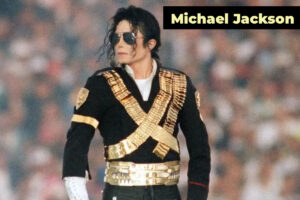
Life and Musical Journey Of Michael Jackson

Michael Jackson: A Name the World Will Never Forget
Some artists define a generation, but Michael Jackson defined an era. Born in a small Indiana city and raised in a working-class family, he grew into one of the most celebrated performers in human history.
Decades after his passing, his music still fills stadiums, his dance moves still inspire millions, and his name still commands global recognition.
Few entertainers have matched the range and impact of Michael Jackson. He was a singer, songwriter, dancer, philanthropist, and cultural icon rolled into one extraordinary human being.
Michael Jackson’s voice could move crowds to tears. His feet told stories no words could capture. His songs crossed borders, languages, and generations with ease.
Today, Michael Jackson remains one of the best-selling music artists of all time, with estimated total record sales exceeding 500 million copies worldwide.
He earned 13 Grammy Awards during his career, alongside countless other honors. His album Thriller (1982) is the best-selling album in history, with approximately 70 million copies sold globally.
This article provides a comprehensive Michael Jackson biography for students, music lovers, researchers, and pop culture enthusiasts.
It covers his childhood, rise to fame, artistic genius, controversies, death, and enduring legacy. Read on to discover the full story of the King of Pop.
Early Life and Background of Michael Jackson
Michael Joseph Jackson was born on August 29, 1958, in Gary, Indiana, a working-class city near Chicago. He was the eighth of ten children in the Jackson family.
The family lived in a small two-bedroom house on Jackson Street. Despite modest means, the household overflowed with music, ambition, and talent.
His mother, Katherine Jackson (nee Scruse), was a deeply musical woman. She played clarinet, cello, and piano. She once dreamed of becoming a country-and-western singer.
Katherine Jackson also worked part-time at Sears to help support the family. Katherine was a devout Jehovah’s Witness, and her faith shaped the household environment significantly.
His father, Joe Jackson, brought a different energy to the home. Joe was a former boxer, a crane operator at US Steel, and a guitarist in a local rhythm and blues band called the Falcons.
He recognized his children’s musical gifts early and pushed them hard, sometimes too hard. Michael later recalled that his father physically and emotionally abused him during rehearsals, keeping a belt nearby during practice sessions.
Michael grew up with three sisters, Rebbie, La Toya, and Janet, and five brothers, Jackie, Tito, Jermaine, Marlon, and Randy.
A sixth brother, Marlon’s twin Brandon, died shortly after birth. Despite family hardships, the children developed remarkable musical talent under their father’s watchful and demanding eye.
By 1964, at just six years old, Michael and his brother Marlon joined the family band as backup musicians. Michael played congas and tambourine.
He later took over as lead singer alongside Jermaine. Even as a child, his stage presence was strikingly powerful.
Rolling Stone magazine later described the young Michael as a prodigy with overwhelming musical gifts.
Michael Jackson Music Career Path
Michael Jackson built a music career that redefined global entertainment and set new standards for artistic excellence.
From his early beginnings to his rise as a solo icon, his journey reflects talent, innovation, and a lasting influence on the music industry.
He began as the standout young voice of The Jackson 5, where his energy and stage presence quickly captured global attention.
During these early years, he developed the performance skills and musical discipline that would shape his future.
As he transitioned from a group member to a solo artist, he transformed into a global superstar, setting new benchmarks in music, performance, and cultural influence.
Jackson 5: The Making of a Child Star
Michael Jackson’s music career began before most children had learned to read. In 1964, Michael and his brother Marlon joined the Jackson Brothers, a band formed by their father Joe Jackson.
The group included older brothers Jackie, Tito, and Jermaine. Michael and Marlon initially played congas and tambourine as backup musicians.
By 1965, Michael had grown into the group’s most powerful voice. He began sharing lead vocals with Jermaine, and the group renamed itself the Jackson 5.
That same year, the group won a local talent show. Michael danced to Robert Parker’s ‘Barefootin’ and sang the Temptations’ ‘My Girl’, thrilling audiences with his natural stage presence.
From 1966 to 1968, the Jackson 5 toured the American Midwest circuit extensively.
They performed at Black venues on the Chitlin’ Circuit, opening for established acts like Sam and Dave, the O’Jays, Gladys Knight, and Etta James.
In August 1967, they competed at the Apollo Theater in Harlem and won a weekly amateur night show. That victory marked a turning point in their journey toward national recognition.
Bobby Taylor of Bobby Taylor and the Vancouvers brought the Jackson 5 to Motown Records in 1968.
The group had opened for Taylor at Chicago’s Regal Theater, and Taylor recognized their exceptional talent. After signing with Motown, the Jackson family relocated to Los Angeles.
Motown executives chose Diana Ross to introduce the group to the public in 1969, calling them the final product of their celebrated musical production line.
Early Singles and First Solo Albums at Motown
The Jackson 5 released their first single, ‘Big Boy’, through Steeltown Records in 1968.
Their Motown debut quickly followed. In January 1970, ‘I Want You Back’ became the first Jackson 5 song to reach number one on the US Billboard Hot 100, staying at the top for four weeks.
Three more Motown singles quickly followed it to number one: ‘ABC’, ‘The Love You Save’, and ‘I’ll Be There’. During this period, Michael also began his solo recording career.
Between 1972 and 1975, he released four solo studio albums with Motown: Got to Be There (1972), Ben (1972), Music and Me (1973), and Forever, Michael (1975).
The title tracks from his first two albums, ‘Got to Be There’ and ‘Ben’, sold well as solo singles. His cover of Bobby Day’s ‘Rockin’ Robin’ also performed strongly on the charts.
On Soul Train, Michael’s performance of the Jackson 5’s hit ‘Dancing Machine’ introduced the robot dance to a mainstream television audience.
The move became widely imitated and demonstrated his growing influence as a performer.
Critics and fans began recognizing that Michael was more than a child prodigy. A genuine artistic force was emerging.
| Key Fact | The Jackson 5 scored four consecutive number-one Billboard Hot 100 hits in 1970 with ‘I Want You Back’, ‘ABC’, ‘The Love You Save’, and ‘I’ll Be There’. |
Leaving Motown and Finding a New Direction
By 1975, growing tensions with Motown came to a head. The Jackson 5 felt frustrated by the label’s refusal to allow them creative input into their recordings.
That year, they left Motown and signed with Epic Records. The group renamed themselves the Jacksons, and their younger brother Randy joined as a full member.
Jermaine chose to remain at Motown and pursue a solo path.
Michael served as the Jacksons’ primary songwriter during this Epic Records period. He wrote hits like ‘Shake Your Body (Down to the Ground)’ in 1978, ‘This Place Hotel’ in 1980, and ‘Can You Feel It’ in 1980.
The Jacksons released six more albums between 1976 and 1984 while continuing to tour internationally.
In 1977, Michael moved to New York City to star as the Scarecrow in The Wiz, a musical film directed by Sidney Lumet and featuring Diana Ross.
The film performed poorly at the box office. However, it introduced Michael to legendary producer and composer Quincy Jones, who had arranged the film’s score.
That introduction proved to be one of the most consequential professional connections in pop music history.
While living in New York, Michael frequented Studio 54, where he first encountered early hip-hop music. The experience influenced his approach to rhythm and percussion in future recordings.
He later incorporated beatboxing into tracks such as ‘Working Day and Night’, reflecting his constant musical curiosity and willingness to evolve.
Off the Wall (1979): The First Adult Statement
Michael’s fifth solo album and first album recorded as an adult, Off the Wall (1979), was produced by Quincy Jones. It marked a dramatic artistic evolution.
The album moved Michael away from the bubblegum pop sound of his childhood toward more sophisticated, complex arrangements rooted in R&B, soul, and disco.
Off the Wall produced four top-ten singles on the US Billboard Hot 100: ‘Don’t Stop ‘Til You Get Enough’, ‘Rock with You’, ‘Off the Wall’, and ‘She’s Out of My Life’.
The first two reached number one on the chart. The album peaked at number three on the Billboard 200 and sold over 20 million copies worldwide, an extraordinary achievement for any artist at the time.
At the Grammy Awards, Michael won Best Male R&B Vocal Performance for ‘Don’t Stop ‘Til You Get Enough’.
At the American Music Awards, he won Favorite Soul/R&B Single for the same track. He followed those honors with Favorite Soul/R&B Album and Favorite Soul/R&B Male Artist in 1981.
The awards confirmed his arrival as a dominant solo force.
Michael felt the album deserved even greater commercial recognition.
Off the Wall was the first solo album to produce four top-ten US singles, yet he believed it should have made a bigger cultural impact.
That feeling of unfulfilled potential drove him into the studio with greater ambition for his next project.
In 1980, he also negotiated the highest royalty rate in the music industry, securing 37 percent of wholesale album profit.
| Key Fact | Off the Wall (1979) sold over 20 million copies worldwide and earned Michael his first Grammy as an adult solo artist. |
Thriller (1982): The Best-Selling Album in History
Michael Jackson’s sixth studio album, Thriller, was released on November 29, 1982. It permanently changed the landscape of popular music.
The album spent 37 weeks at number one on the Billboard 200 and remained in the chart’s top ten for 80 consecutive weeks. No album had ever done either before.
Thriller was the first album in history to produce seven Billboard Hot 100 top-ten singles. Those singles included the number-one hits ‘Billie Jean’ and ‘Beat It’.
The album became the best-selling album of all time in the United States and the best-selling album in history globally, with an estimated 70 million copies sold worldwide.
On March 25, 1983, Michael appeared on the Motown 25: Yesterday, Today and Forever NBC television special.
He performed ‘Billie Jean’ wearing a rhinestone-decorated glove and debuted the moonwalk. Jeffrey Daniel had taught him the move three years earlier.
The performance was watched by an estimated 47 million viewers and was described as extraordinary by Rolling Stone and praised by The New York Times for its perfect timing and technique.
At the 26th Annual Grammy Awards in 1984, Thriller received 13 nominations, the most for any album at that time.
Michael received 12 nominations in total, a single-night record later tied by Babyface. He won eight awards that night, breaking the record for most wins in a single ceremony, later tied by Santana.
His wins included Album of the Year and Record of the Year for ‘Beat It’. At the American Music Awards, he won eight more honors that year.
NOTE
The extended Thriller music video, directed by John Landis and approximately 14 minutes long, featured Michael leading a zombie dance sequence.
Its release doubled the album’s sales. Time magazine described his influence at that moment as ‘star of records, radio, rock video.
A one-man rescue team for the music business.’ The New York Times wrote that in the world of pop music, there was Michael Jackson and there was everyone else.
Business Deals, Pepsi, and the ATV Catalog Acquisition
Thriller’s commercial success opened doors to unprecedented business opportunities.
In November 1983, Michael and his brothers partnered with PepsiCo in a five-million-dollar promotional deal, a record for a celebrity endorsement at the time.
Michael helped design the campaign, suggesting that ‘Billie Jean’ with revised lyrics serve as the commercial’s jingle.
During the filming of a Pepsi commercial on January 27, 1984, pyrotechnics accidentally set Michael’s hair on fire. He suffered second-degree burns to his scalp. Pepsi settled out of court.
Michael donated the 1.5-million-dollar settlement to the Brotman Medical Center in Culver City, California. The center named its burn unit after him in his honor.
Michael signed a second Pepsi deal in the late 1980s, worth ten million dollars, covering 20 countries and providing financial backing for his Bad album and world tour.
Beyond Pepsi, he held endorsement deals with LA Gear, Suzuki, and Sony, though none matched the Pepsi partnerships in scale or significance.
A conversation with Paul McCartney in the early 1980s revealed a critical insight. McCartney told Michael he earned forty million dollars annually from owning other artists’ song rights.
Michael began studying music publishing carefully. In 1985, he purchased the ATV Music Publishing catalog, which included publishing rights to nearly 4,000 songs, most of the Beatles’ catalog among them.
His bid of 47.5 million dollars was accepted. The purchase would later prove to be one of the most valuable assets in music history.
| Key Fact | Michael purchased the ATV Music Publishing catalog in 1985 for $47.5 million. In 1995, he merged it with Sony’s publishing division to form Sony/ATV, earning $95 million upfront. |
The Victory Tour and ‘We Are the World’
The Victory Tour of 1984 was the final chapter of the Jacksons as a touring unit.
The tour headlined all the brothers and showcased Michael’s new solo material. More than two million Americans attended.
During the final concert at Dodger Stadium in Los Angeles, Michael announced his permanent departure from the Jacksons.
He addressed the audience during ‘Shake Your Body’, closing that chapter of his family music story.
Following controversy over ticket sales during the Victory Tour, Michael donated his personal share of the proceeds, estimated between three and five million dollars, to charity.
The gesture demonstrated a pattern of generosity that would define his philanthropic legacy throughout his career.
In 1985, Michael co-wrote ‘We Are the World’ with Lionel Richie. The charity single raised money for those affected by poverty in the United States and famine in Africa.
The song sold 20 million copies and earned approximately 63 million dollars for charitable causes. It won four Grammy Awards in 1985, including Song of the Year for both Jackson and Richie.
Bad (1987): Five Number-One Singles
Michael released his seventh studio album, Bad, on August 31, 1987. Anticipation for the album was enormous after the unprecedented success of Thriller.
Bad debuted at number one on the Billboard 200 and sold over 2.25 million copies in its first week in the United States alone.
Bad made history by becoming the first album ever to generate five US number-one Billboard Hot 100 singles.
Those singles were ‘I Just Can’t Stop Loving You’, ‘Bad’, ‘The Way You Make Me Feel’, ‘Man in the Mirror’, and ‘Dirty Diana’.
A sixth single, ‘Smooth Criminal’, peaked at number seven. No album had achieved that milestone before.
The Bad World Tour ran from September 12, 1987, to January 27, 1989. In Japan, 14 consecutive sold-out shows drew 570,000 people, nearly tripling the previous record for a single tour in that country.
At Wembley Stadium in London, 504,000 people attended seven sold-out shows, setting a Guinness World Record.
The album topped the charts in 25 countries and became the best-selling album worldwide in both 1987 and 1988. It has since sold over 35 million copies globally.
Bad won the 1988 Grammy for Best Engineered Recording (Non Classical) and the 1990 Grammy Award for Best Music Video, Short Form, for ‘Leave Me Alone’.
At the American Music Awards in 1989, Michael received an Award of Achievement following the album’s remarkable five-number-one singles achievement.
President George H. W. Bush designated him the White House’s Artist of the Decade that same year.
| Key Fact | Bad (1987) is the first album ever to produce five number-one US Billboard Hot 100 singles from a single album release. |
Dangerous (1991): Artistic Reinvention
In March 1991, Michael renewed his record contract with Sony Music Entertainment for 65 million dollars, a record-breaking deal at that time.
He released his eighth studio album, Dangerous, on November 21, 1991. The album was co-produced with Teddy Riley and marked another musical evolution toward new jack swing and harder rhythm and blues sounds.
Dangerous debuted at number one on the Billboard 200. Its lead single, ‘Black or White’, held the number-one spot on the Billboard Hot 100 for seven consecutive weeks.
The follow-up single, ‘Remember the Time’, peaked at number three. By the end of 1992, Dangerous was the best-selling album worldwide, and ‘Black or White’ was the best-selling single globally.
In January 1993, Michael performed at Super Bowl XXVII in Pasadena, California. With 133.4 million viewers, it was the first Super Bowl halftime show to draw a larger audience than the game itself.
The performance boosted Dangerous back 90 positions up the US albums chart.
That February, he appeared in a 90-minute televised interview with Oprah Winfrey watched by more than 90 million Americans, the most-watched television interview in US history at that time.
The Dangerous World Tour ran from June 1992 to November 1993. It attracted more than 3.5 million fans across 69 concerts outside the United States, grossing 100 million dollars.
Michael sold HBO the broadcast rights to his Bucharest concert for 20 million dollars, the highest fee ever paid for a concert television broadcast.
In the decades since its release, Dangerous has been widely celebrated as arguably his greatest artistic achievement.
HIStory (1995): A Bold and Defiant Statement
In June 1995, Michael released the double album HIStory: Past, Present and Future, Book I. The first disc compiled his greatest hits.
The second disc featured 13 original songs and two cover versions.
HIStory debuted at number one on album charts globally and has sold approximately 20 million double-disc sets (equivalent to 40 million units) worldwide, making it one of the best-selling albums in history.
The album’s first single, ‘Scream’, was a duet with his youngest sister Janet. The song addressed the media’s treatment of Michael during the 1993 child abuse allegations.
It peaked at number five on the Billboard Hot 100 and received a Grammy nomination for Best Pop Collaboration with Vocals.
The second single, ‘You Are Not Alone’, entered the Guinness World Records as the first song ever to debut at number one on the Billboard Hot 100 chart.
In late 1995, Michael merged his ATV Music catalog with Sony’s music publishing division. The merger created Sony/ATV Music Publishing.
Michael retained ownership of half the company and received 95 million dollars upfront, along with rights to additional songs.
The partnership expanded his publishing empire significantly and secured his financial leverage within the industry.
The HIStory World Tour ran from September 1996 to October 1997. Michael performed 82 concerts across five continents, 35 countries, and 58 cities to more than 4.5 million fans.
It became his most attended tour ever and grossed 165 million dollars.
During the tour, ‘Earth Song’ topped the UK Singles Chart for six consecutive weeks over Christmas 1995.
Blood on the Dance Floor, a remix album with five new songs released in 1997, became the best-selling remix album of all time with six million copies sold worldwide.
Invincible (2001): His Final Studio Album
From October 1997 to September 2001, Michael worked on his tenth solo studio album, Invincible.
The album cost approximately 30 million dollars to record, making it the most expensive album ever made at that time.
It was released on October 30, 2001, marking his first full-length album of original material in six years.
Invincible debuted at number one in 13 countries and sold eight million copies globally, receiving double-platinum certification in the United States.
However, a bitter dispute between Michael and Sony Music Entertainment overshadowed the release. Michael had expected his album master licenses to revert to him in the early 2000s.
Contractual clauses pushed that revert date years further into the future. Michael publicly criticized Sony Music chairman Tommy Mottola, calling him a racist and accusing him of exploiting Black artists.
Sony refused to renew Michael’s contract after the dispute. The label cited a failed 25-million-dollar promotional campaign and pointed to Michael’s refusal to tour the United States in support of Invincible.
The falling-out ended his long relationship with Epic/Sony Records. Invincible remains the final album of original material he completed and released during his lifetime.
| Key Fact | Invincible (2001) was the most expensive album ever made at the time, costing approximately $30 million to record. It sold eight million copies worldwide. |
Thriller 25, This Is It, and Final Musical Activities
In 2007, Michael and Sony purchased Famous Music LLC, formerly owned by Viacom. The deal gave Michael publishing rights to songs by Eminem and Beck, further expanding his catalog holdings.
His music publishing portfolio had grown into one of the most valuable in the entertainment industry.
In 2008, for the 25th anniversary of Thriller, Sony and Michael released Thriller 25.
The album featured remixes with contemporary artists and two new singles: ‘The Girl Is Mine 2008’ and ‘Wanna Be Startin’ Somethin’ 2008′.
Sony also released the King of Pop greatest hits series for Michael’s 50th birthday, with different track selections tailored for different international markets.
In March 2009, Michael announced a major comeback concert series, This Is It, at the O2 Arena in London.
Fifty dates were eventually scheduled after more than one million tickets sold in less than two hours.
The concerts were planned to run from July 2009 through March 2010. Michael relocated to Los Angeles and began intensive rehearsals under choreographer Kenny Ortega.
The concerts would have been his first major live performances since the HIStory World Tour in 1997.
Michael died on June 25, 2009, six weeks before the first scheduled concert. A documentary film, Michael Jackson’s This Is It, compiled from rehearsal footage was released in October 2009.
It provided the world a final glimpse of his artistry at near-full power. The film grossed over 250 million dollars globally in a limited two-week run.
What Made Michael Jackson Unique
Michael Jackson stood apart not only because of his success, but because of the rare combination of skills he brought to his craft.
His artistry went beyond singing. He shaped sound, movement, and storytelling into one powerful experience.
He blended vocal expression, musical creativity, and visual performance in a way that few artists have ever matched.
Michael Jackson stood apart from his peers through a rare combination of vocal ability, musical intelligence, and visual creativity.
In this section, we explore the elements that defined his uniqueness.
His distinct vocal style and strong musicianship, along with his groundbreaking dance moves, set him apart from his peers.
Michael Jackson’s innovative music videos and choreography further shaped a legacy that continues to influence artists around the world.
Vocal Style Of Michael Jackson
Michael Jackson’s voice was one of the most expressive instruments in pop music history.
As a child, he possessed a clear, powerful soprano voice that carried emotional depth far beyond his years.
As he matured, his voice evolved into a rich tenor with remarkable range, control, and emotional precision.
He used techniques like the signature ‘hee-hee’ exclamation, grunts, and rhythmic breathing as vocal percussion within his songs.
These elements became instantly recognizable and widely imitated.
Influences Of Michael Jackson
Michael drew from a wide range of musical influences. James Brown, the Godfather of Soul, was perhaps the most significant early influence on his stage performance and rhythmic sensibility.
Diana Ross, with whom he worked during his Motown years, inspired his showmanship.
Fred Astaire and Gene Kelly shaped his appreciation for combining dance with storytelling.
He also drew inspiration from Charlie Chaplin, Sammy Davis Jr., and the street performers he observed throughout his youth.
Michael Jackson’s Musicianship
Beyond his voice and dance, Michael was a gifted songwriter, producer, and multi-instrumentalist. He played piano, keyboard, and drums.
Michael Jackson also used beatboxing to communicate song ideas to collaborators. He co-wrote many of his greatest hits and was deeply involved in producing his albums.
His perfectionism in the studio became legendary. He often worked long overnight sessions to achieve the exact sound he envisioned.
Michael Jackson’s Dance
Dance was perhaps Michael’s most electrifying artistic gift.
He popularized the moonwalk, a move in which the dancer appears to glide backward while walking forward, on March 25, 1983, during a television special called Motown 25: Yesterday, Today and Forever.
The performance is considered one of the greatest moments in television history.
He also created the anti-gravity lean, famously used in the ‘Smooth Criminal’ video, and brought the robot dance into mainstream popular culture.
Themes and Genres of Michael Jackson
Michael’s music spanned a wide range of genres including pop, rhythm and blues, soul, disco, funk, rock, and new jack swing. His lyrical themes were equally diverse.
Songs like ‘Man in the Mirror’ and ‘Heal the World’ reflected his desire for social change and global peace.
‘Billie Jean’ explored personal responsibility and fame. ‘Earth Song’ addressed environmental destruction.
‘They Don’t Care About Us’ confronted racial injustice. His albums consistently combined entertainment with meaningful messages.
Music Videos and Choreography
Michael Jackson transformed the music video from a promotional tool into a cinematic art form. Before his era, music videos were simple performance clips.
After Thriller (1983), they became mini-movies with original plots, professional choreography, Hollywood-level special effects, and dedicated budgets.
The ‘Thriller’ music video, directed by John Landis and running approximately 14 minutes, featured Michael leading a zombie dance sequence and remains one of the most watched music videos of all time.
‘Beat It’, ‘Billie Jean’, ‘Bad’, ‘Smooth Criminal’, and ‘Black or White’ each set new creative standards for the medium.
Michael Jackson’s Personal Life
The King of Pop lived a life that drew as much public attention as his music. Beyond the stage, his personal story reflected both extraordinary success and deep personal challenges.
In this section, we explore key aspects of his life outside music.
These include his changing physical appearance and health struggles, as well as the creation of Neverland Ranch and the Peter Pan persona he embraced.
In addition, they cover his marriages to Lisa Marie Presley and Debbie Rowe, along with his role as a father to his three children.
His life often unfolded under intense media scrutiny, which shaped public perception and added pressure to his personal experiences.
Despite this, he sought moments of privacy and normalcy, especially in his role as a father.
His relationships, lifestyle choices, and personal struggles all contributed to a complex and deeply human story that continues to draw interest around the world.
Physical Appearance and Health Struggles
Michael Jackson’s changing physical appearance drew intense media attention beginning in the mid-1980s.
His skin, which had been medium-brown during his childhood and youth, grew progressively lighter.
Widespread public speculation suggested he was deliberately bleaching his skin. Michael consistently denied those claims.
His dermatologist Dr. Arnold Klein documented that Michael had vitiligo, a medical condition in which patches of skin lose their natural pigment.
Klein identified the condition in 1983 and formally diagnosed it in 1986. He also diagnosed Michael with discoid lupus erythematosus.
To manage the uneven blotchiness caused by vitiligo, Michael used fair-colored makeup and prescription depigmentation creams, creating a more uniform complexion.
Michael addressed the issue directly during a 1993 television interview with Oprah Winfrey. He stated publicly for the first time that he had vitiligo and could not control it.
He said the suggestion that he wanted to abandon his racial identity caused him deep pain.
His mother later said Michael may have become dependent on cosmetic procedures that he originally began to address the vitiligo.
Michael’s autobiography acknowledged two rhinoplasty surgeries and a cleft chin procedure.
Significant weight loss became a recurring health issue from the early 1980s onward.
Witnesses around him described periods of dizziness and speculation about eating disorder symptoms. He attributed early weight changes to adopting a vegetarian diet and reshaping his body for dancing.
His later years were marked by growing concerns about his health, sleep problems, and painkiller dependence that began after his Pepsi commercial injury in 1984.
| Medical Note | Michael Jackson was formally diagnosed with vitiligo by dermatologist Dr. Arnold Klein. His skin lightening was a medical consequence of the condition, managed with depigmentation creams and makeup. |
Neverland Ranch and the Peter Pan Persona
In March 1988, Michael purchased approximately 2,700 acres of land near Santa Ynez, California, for 17 million dollars.
He named the property Neverland Ranch, a direct reference to the fictional world of the boy who never grows up, Peter Pan.
The choice reflected his deep identification with childhood, innocence, and the wonder he felt he had been denied during his own upbringing.
Michael transformed Neverland into a private paradise. He installed a Ferris wheel, a carousel, a movie theater, and a zoo.
A security staff of 40 people patrolled the grounds. He invited underprivileged children to use the theme park rides as part of his philanthropic activities.
For Michael, Neverland represented both a personal sanctuary and a gift to children he believed deserved joy.
The property became a symbol of his unique relationship with childhood and public perception of his eccentricity.
Media coverage of Neverland ranged from fascinated to critical. Michael later left Neverland permanently after his 2005 acquittal on child molestation charges.
Fortress Investments threatened to foreclose on the property in 2008 due to outstanding loan obligations.
Michael ultimately transferred its title to a joint venture company to resolve the financial pressure.
Marriages: Lisa Marie Presley and Debbie Rowe
In late 1993, Michael proposed to Lisa Marie Presley, the daughter of Elvis Presley, during a telephone conversation.
Their relationship developed quietly, away from the heavy media glare surrounding Michael’s legal difficulties at the time.
They married in La Vega, Dominican Republic, in May 1994 in a private civil ceremony presided over by judge Hugo Francisco Alvarez Perez.
The marriage attracted immediate media skepticism. Many commentators viewed it as a publicity strategy designed to improve Michael’s public image during the ongoing child abuse allegations against him.
Tabloid speculation also suggested the marriage would accelerate Lisa Marie’s ambitions as a singer.
The couple separated in December 1995, and Lisa Marie cited irreconcilable differences when she filed for divorce the following month.
Lisa Marie later revealed that she and Michael attempted to reconcile intermittently for four years after their divorce.
She spoke warmly of traveling the world to be with him during those post-divorce years. Their bond clearly contained genuine feeling, whatever public skepticism surrounded its origins.
Michael’s second marriage was to Debbie Rowe, a dermatology assistant who worked in the office of his doctor, Arnold Klein. Michael had befriended Rowe years earlier.
During the HIStory World Tour in 1996, Michael and Rowe married in Sydney, Australia. Rowe was six months pregnant with Michael’s first child at the time of their wedding.
The couple divorced in 2000, with Rowe conceding custody of both children in exchange for an 8.5-million-dollar settlement.
Fatherhood and His Three Children
Fatherhood was one of the most important and joyful parts of Michael Jackson’s personal life.
He spoke frequently and passionately about his love for children and his deep desire to be the kind of father he himself had never had.
He approached parenthood with protective devotion and genuine warmth.
Michael Joseph Jackson Jr., widely known as Prince, was born on February 13, 1997. His mother was Debbie Rowe. Paris-Michael Katherine Jackson followed on April 3, 1998, also born to Rowe.
When Michael and Rowe divorced in 2000, Rowe conceded custody to Michael.
In 2004, after the second round of child abuse allegations, Rowe returned to court to reclaim custody. The custody matter was settled in 2006.
Michael’s third child, Prince Michael Jackson II, better known as Blanket, was born in 2002. An anonymous surrogate mother carried the pregnancy via artificial insemination.
In November 2002, Michael attracted wide condemnation when he dangled Blanket briefly over the railing of his hotel room four floors above ground in Berlin.
He publicly apologized for the incident and called it a terrible mistake.
Michael went to extraordinary lengths to protect his children’s identities during their childhood. He required them to wear masks or coverings over their faces when appearing in public.
He was determined that they would experience as normal and private a childhood as possible, shielded from the relentless attention he had experienced since his own earliest years.
| Key Fact | Michael Jackson had three children: Prince (born 1997), Paris (born 1998), and Blanket, now known as Bigi (born 2002). |
The 1993 Child Abuse Allegations
In the second half of 1993, Michael Jackson faced serious and damaging allegations. A 13-year-old boy named Jordan Chandler and his family accused Michael of sexual abuse.
The allegations emerged against the backdrop of a personal friendship Michael had developed with the Chandler family earlier that year.
Jordan’s father, Evan Chandler, was recorded threatening to destroy Michael’s career through a carefully planned strategy.
Michael’s investigator, Anthony Pellicano, met with Jordan shortly after, and Jordan at that point denied any abuse had occurred.
Evan Chandler subsequently demanded twenty million dollars from Michael in August 1993. Michael declined, and Chandler escalated his financial demands before eventually filing a civil lawsuit seeking thirty million dollars.
Prosecutors raided Neverland Ranch and other properties but found no child pornography or incriminating evidence.
In December 1993, a strip search was authorized to verify a physical description provided by Jordan Chandler.
According to Reuters and USA Today, the physical description did not match the photographic evidence gathered by investigators.
Grand juries were later convened and jurors stated publicly that no damaging evidence against Michael was presented.
In January 1994, the civil lawsuit settled for approximately 18.3 million dollars in total payments to the Chandler family. The settlement included no admission of guilt.
The Chandlers dropped child molestation allegations from their complaint, filing instead under claims of negligence.
Police never filed criminal charges. The criminal investigation was formally closed on September 21, 1994, after more than 400 witnesses had been examined. All potential leads were found to be false.
Painkiller Dependency and Health Pressures
Michael’s dependence on prescription painkillers began in 1984 following the Pepsi commercial accident. The reconstructive scalp surgeries required after his burns involved significant pain management.
Over time, he became increasingly reliant on those medications to function. The psychological stress of the 1993 child abuse allegations intensified his dependency significantly.
On November 12, 1993, Michael cancelled the remainder of the Dangerous World Tour. He cited health problems, the mounting pressure of the abuse allegations, and painkiller addiction as the reasons.
In a public statement, he thanked his close friend Elizabeth Taylor for her personal support and counsel during that period. The tour’s cancellation also ended his sponsorship relationship with Pepsi.
Michael sought rehabilitation treatment following the tour cancellation. His battles with painkiller dependency, compounded by the stress of legal proceedings, media scrutiny, and financial pressures, created recurring health crises throughout the 1990s and 2000s.
In late 1995, he collapsed during rehearsals for a televised performance due to a stress-related panic attack and required hospital treatment.
The Martin Bashir Documentary and 2003 Arrest
In May 2002, filmmaker Martin Bashir began following Michael for a documentary project. The resulting film, Living with Michael Jackson, was broadcast in February 2003.
It showed Michael holding hands with a 12-year-old boy and calmly discussing his practice of sharing his bedroom and bed with children he befriended.
Michael maintained that the relationships were completely innocent and that his words were being taken out of context and misrepresented.
He saw sharing his living space as an extension of the protective, nurturing relationship he tried to offer children who had not experienced love and security.
The documentary’s framing provoked widespread public alarm.
On December 18, 2003, Santa Barbara authorities charged Michael with seven counts of child molestation and two counts of providing alcohol to a minor.
Michael denied all charges and pleaded not guilty. He was arrested and processed at a Santa Barbara County sheriff’s office in a moment captured by international media.
The arrest was among the most photographed celebrity events of the decade.
The 2005 Trial and Acquittal
The People v. Jackson trial began on January 31, 2005, in Santa Maria, California.
It lasted through the end of May. Michael attended every session despite clearly deteriorating health and visible weight loss throughout the proceedings.
He publicly acknowledged the toll the experience was taking on his physical and emotional wellbeing.
On June 13, 2005, Michael Jackson was acquitted on all counts. Jurors determined the prosecution had failed to present sufficient evidence to support a conviction on any charge.
FBI files subsequently released in 2009 confirmed that the agency had monitored Michael for years during both the 1993 allegations and the 2005 trial.
Those files showed the FBI found no evidence of criminal conduct.
The acquittal represented a legal vindication but left deep personal wounds. Michael became increasingly reclusive following the trial.
In June 2005, he relocated to Bahrain as a guest of Sheikh Abdullah of the Bahraini royal family.
His departure from the United States reflected both his exhaustion and his desire to escape the relentless attention and judgment of the American media environment.
| Legal Fact | Michael Jackson was acquitted on all 14 counts at the 2005 trial. FBI records released in 2009 confirmed no criminal evidence was ever found in either the 1993 or 2005 investigations. |
Financial Crisis and Near-Bankruptcy
Michael Jackson’s financial difficulties grew serious in the years following his 2005 acquittal.
The legal fees, lifestyle costs at Neverland, and years of reduced commercial activity had accumulated into enormous debt.
By 2006, Guy Holmes, the CEO of Two Seas Records, a Bahraini label Michael briefly signed with, disclosed that Michael was on the verge of bankruptcy and involved in 47 ongoing lawsuits.
Michael owed approximately 270 million dollars to Bank of America, loans later acquired by investment firm Fortress Investments.
In April 2006, he used a portion of his ATV catalog stake, then valued at approximately one billion dollars, as collateral for a new 300-million-dollar loan from Fortress.
The agreement included Sony Music’s option to purchase approximately 25 percent of the catalog at a predetermined price.
Michael’s financial advisers urged him to reduce his catalog ownership to avoid losing everything.
At least thirty of his employees had gone unpaid. Back wages of 306,000 dollars were owed, and Michael was ordered to pay 100,000 dollars in penalties.
Neverland Ranch’s main house was closed as a cost-saving measure while Michael lived in Bahrain. In 2008, Fortress threatened to foreclose on Neverland Ranch.
Colony Capital LLC purchased Michael’s debts and facilitated a transfer of Neverland’s title to a new joint venture company, earning Michael 35 million dollars.
By the time of his death in 2009, Michael’s total debt had grown to nearly 500 million dollars. He was three to four months behind on payments for his rented home in San Fernando Valley.
The This Is It concert series was partly designed to recoup those debts, with additional plans reportedly including a world tour, a new album, films, a museum, and a casino venture.
Cultural Impact and Global Influence
Michael Jackson’s cultural impact reaches far beyond music. He broke racial barriers at a time when Black artists rarely appeared on MTV.
When Thriller hit the charts, MTV was predominantly programming rock music and resisting Black artists.
Michael’s commercial appeal forced the network to reconsider its policies. His presence opened doors for countless Black artists who followed.
His 1983 television appearance, where he performed the moonwalk during the Motown 25 special, generated one of the most talked-about moments in broadcast history.
Millions of viewers had never seen anything like it. Children across the world began practicing the move in living rooms, schoolyards, and backyards within days.
Jackson popularized street dance moves including the moonwalk, the robot, and the anti-gravity lean.
These moves entered global popular culture and influenced street dance communities worldwide.
His influence is visible in virtually every major pop and R&B performer who came after him, from Usher and Justin Timberlake to Beyonce and Bruno Mars.
His memorial service at the Staples Center in Los Angeles was attended by thousands and estimated to have been watched by more than 2.5 billion people globally through television and online streams.
Few public events in modern history have commanded that level of worldwide attention.
Philanthropy and Humanitarian Work
Despite the controversies and personal difficulties, Michael Jackson’s humanitarian efforts and charitable record stands as one of the most remarkable in entertainment history.
In 2000, Guinness World Records recognized him for supporting 39 charities, more than any other entertainer in the world at that time. His estimated lifetime donations totaled approximately 500 million dollars to charitable causes.
He co-wrote ‘We Are the World’ in 1985 alongside Lionel Richie, a song that raised millions of dollars for famine relief in Africa.
Michael founded the Heal the World Foundation in 1992. The charity brought underprivileged children to Neverland Ranch to experience its theme park facilities and sent millions of dollars to children affected by war, poverty, and disease globally.
All profits from his single ‘Man in the Mirror’ went to charitable causes. From 1985 to 1990, he donated 455,000 dollars to the United Negro College Fund.
He pleaded with the Clinton administration at Bill Clinton’s 1993 inaugural gala to increase federal funding for HIV/AIDS research and charities.
He performed ‘Gone Too Soon’, dedicated to his friend and AIDS spokesperson Ryan White, at that gala.
During a 1992 visit to Africa, he was greeted by more than 100,000 people in Gabon and was crowned ‘King Sani’ by a tribal chief in Ivory Coast.
He organized benefit concerts in Germany and Korea in 1999 that directed proceeds to the Nelson Mandela Children’s Fund, the Red Cross, and UNESCO.
Michael Jackson’s Musical Innovations and Achievements
Michael Jackson’s album Thriller, released on November 29, 1982, became the best-selling album in history. It sold an estimated 70 million copies globally.
Thriller spent 37 weeks at number one on the Billboard 200 chart and remained in the top ten for 80 consecutive weeks. It was the first album ever to produce seven Billboard Hot 100 top-ten singles.
His follow-up album, Bad (1987), made another historic mark. It became the first album ever to generate five number-one singles on the US Billboard Hot 100.
Those five hits were ‘I Just Can’t Stop Loving You’, ‘Bad’, ‘The Way You Make Me Feel’, ‘Man in the Mirror’, and ‘Dirty Diana’. No other album had ever achieved that milestone at the time.
Jackson holds a joint record for a male solo artist, earning 13 number-one Billboard Hot 100 singles. He remains the only artist in music history to achieve a top-ten single in six different decades.
These records reflect not just early success but sustained dominance over an extraordinary span of time.
His total awards are staggering. He received 13 Grammy Awards plus both the Grammy Legend Award and the Grammy Lifetime Achievement Award.
He earned 26 American Music Awards, 12 World Music Awards, 8 MTV Video Music Awards, 6 Brit Awards, and three Presidential honors.
Music historians and critics consistently rank him among the greatest entertainers of all time.
Jackson pioneered the use of short-film storytelling in music videos, forever changing how artists marketed their music. He also secured the highest royalty rate in the music industry in 1980, receiving 37 percent of the wholesale album profit.
His business acumen matched his artistic brilliance. In 2024, half of his music catalogue sold to Sony Music Publishing for 600 million dollars, the largest music catalog acquisition for a single artist in history.
Death of Michael Jackson
By early 2009, Michael was rehearsing intensively for the This Is It concert series. Rehearsals took place at the Forum and Staples Center in Los Angeles under the direction of choreographer Kenny Ortega.
Those who observed the rehearsals reported that Michael’s artistry remained remarkable even as his physical condition caused concern among colleagues.
On the morning of June 25, 2009, Michael’s personal physician Dr. Conrad Murray administered propofol, a powerful surgical anesthetic, to help Michael sleep.
Michael had been struggling with severe insomnia and had reportedly become reliant on propofol for sleep management. Dr. Murray administered the drug without proper monitoring equipment or emergency medical resources nearby.
Michael went into cardiac arrest and became unresponsive. Emergency services were called, but efforts to revive him at Ronald Reagan UCLA Medical Center were unsuccessful.
Doctors officially pronounced him dead at 2:26 PM Pacific Time. He was 50 years old. The official cause of death was cardiac arrest caused by acute propofol and benzodiazepine intoxication.
The world reacted with immediate and overwhelming grief. The news created one of the largest surges in internet traffic ever recorded.
Michael’s music sales spiked dramatically across every global market.
His memorial service at the Staples Center on July 7, 2009, was attended by more than 17,500 people inside and estimated to have been watched by over 2.5 billion viewers globally through television and online broadcasts.
In November 2011, Dr. Conrad Murray was convicted of involuntary manslaughter. He was sentenced to four years in prison but served approximately two years before his release. Michael Jackson was buried at Forest Lawn Memorial Park in Glendale, California.
Discography of Michael Jackson
Michael Jackson built one of the most remarkable music catalogs in modern history. His albums shaped the sound of pop music and influenced artists across many generations.
Each release shows his growth as a singer, songwriter, and performer. Fans and critics often study his discography to understand how he changed the music industry.
He began his solo journey at a young age and gained global recognition in the late 1970s. The album Off the Wall introduced a fresh blend of pop, funk, and rhythm and blues.
Soon after, Thriller raised the standard for music production and storytelling in songs. It became one of the most successful albums ever released and expanded his audience around the world.
Michael Jackson continued this momentum with albums such as Bad, Dangerous, HIStory: Past, Present and Future, Book I, and Invincible.
Each project brought new sounds, bold themes, and memorable hits. His music often addressed love, social issues, unity, and personal reflection. Listeners connected with both the message and the energy in his work.
Today, his discography stands as an important part of global music culture. Many musicians study his albums for inspiration and innovation.
His songs still attract new listeners and continue to influence the direction of pop music.
Solo Studio Albums
| S/N | Album Title | Year | Label | Notable Singles |
| 1 | Got to Be There | 1972 | Motown | Got to Be There, Rockin’ Robin |
| 2 | Ben | 1972 | Motown | Ben, People Make the World Go Round |
| 3 | Music and Me | 1973 | Motown | Music and Me, With a Child’s Heart |
| 4 | Forever, Michael | 1975 | Motown | One Day in Your Life, We’re Almost There |
| 5 | Off the Wall | 1979 | Epic | Don’t Stop ‘Til You Get Enough, Rock with You |
| 6 | Thriller | 1982 | Epic | Billie Jean, Beat It, Thriller |
| 7 | Bad | 1987 | Epic | Bad, Man in the Mirror, Dirty Diana |
| 8 | Dangerous | 1991 | Epic | Black or White, Remember the Time |
| 9 | HIStory | 1995 | Epic | You Are Not Alone, Earth Song |
| 10 | Invincible | 2001 | Epic | You Rock My World, Butterflies |
Jackson 5 / The Jacksons (Selected Albums)
- Diana Ross Presents the Jackson 5 (1969)
- ABC (1970)
- Third Album (1970)
- Maybe Tomorrow (1971)
- Destiny (1978)
- Triumph (1980)
- Victory (1984)
Posthumous Releases
- Michael (2010)
- Xscape (2014)
Quick Facts at a Glance
| Full Name | Michael Joseph Jackson |
| Date of Birth | August 29, 1958, Gary, Indiana, USA |
| Date of Death | June 25, 2009, Los Angeles, California, USA |
| Age at Death | 50 years old |
| Cause of Death | Cardiac arrest caused by acute propofol intoxication |
| Nationality | American |
| Profession | Singer, Songwriter, Dancer, Philanthropist |
| Known For | King of Pop; Moonwalk; Thriller album; record-breaking music sales |
| Children | 3: Michael Joseph Jackson II (Blanket), Paris Jackson, Prince Jackson |
| Spouses | Lisa Marie Presley (m. 1994, div. 1996); Debbie Rowe (m. 1996, div. 2000) |
| Grammy Awards | 13 Grammy Awards, Grammy Legend Award, Grammy Lifetime Achievement Award |
| Best-Selling Album | Thriller (1982) – approximately 70 million copies worldwide |
| Record Sales | Over 500 million records sold globally |
| No. 1 Singles | 13 number-one Billboard Hot 100 singles (joint record for male solo artist) |
| Inducted Into | Rock and Roll Hall of Fame (twice), Songwriters Hall of Fame, Dance Hall of Fame |
| Burial Place | Forest Lawn Memorial Park, Glendale, California |
Final Note
Michael Jackson was more than a musician. He was a movement. In a career spanning four decades, he reshaped what popular music could look and sound like.
He challenged racial boundaries, redefined visual performance, and connected with audiences on every continent.
His songs carried joy, pain, social consciousness, and pure entertainment in equal measure.
His life was not without struggle. He faced public scrutiny, personal controversy, and the unique pressures of fame from childhood.
Yet through it all, he produced a body of work that continues to inspire, entertain, and educate listeners around the world.
He donated an estimated 500 million dollars to charitable causes and used his platform to advocate for children and global harmony.
When Michael Jackson died on June 25, 2009, at the age of 50, the world fell silent for a moment. Then it erupted in remembrance, reverence, and celebration of the art he left behind.
Today, his music streams in the billions. His dance moves appear in classrooms and stadiums alike. His name remains synonymous with excellence in entertainment.
The King of Pop may be gone, but his kingdom endures.
Every moonwalk performed at a school talent show, every ‘Thriller’ played at a Halloween party, and every stadium concert production that reaches for cinematic brilliance carries a piece of Michael Jackson’s legacy forward.
His music will outlast any controversy, any rumor, and any generation.
For students, music lovers, researchers, and anyone curious about the history of popular culture, Michael Jackson’s story is essential reading. His biography is not just the story of one man.
It is the story of how art, ambition, and humanity can combine to create something truly timeless.
Frequently Asked Questions (FAQ)
This section answers some of the most common questions about Michael Jackson.
It provides clear and helpful information about his life, music career, achievements, and influence on the entertainment industry.
Readers can quickly find answers to key topics that many fans and researchers often want to know.
Why is Michael Jackson called the King of Pop?
Michael Jackson earned the title the King of Pop through a combination of unprecedented commercial success, artistic innovation, and global cultural influence. The title was popularized in the late 1980s and early 1990s as his albums Thriller and Bad set records that had never been achieved before. His mastery of pop music across multiple decades, his transformative impact on the music video medium, and his status as the best-selling solo artist in history cemented the title as one of the most recognized honorifics in entertainment.
When did Michael Jackson die?
Michael Jackson died on June 25, 2009. He was found unresponsive at his rented home in Los Angeles, California, and was transported to Ronald Reagan UCLA Medical Center, where he was pronounced dead at 2:26 PM Pacific Time.
How did Michael Jackson die?
Michael Jackson died from cardiac arrest caused by acute propofol and benzodiazepine intoxication. His personal physician, Dr. Conrad Murray, had been administering propofol, an anesthetic normally used only in clinical surgical settings, to help Jackson sleep during the rehearsal period for his This Is It comeback concerts. Dr. Murray was convicted of involuntary manslaughter in 2011.
How old was Michael Jackson when he died?
Michael Jackson was 50 years old when he died. He was born on August 29, 1958, and passed away on June 25, 2009, just over two months before what would have been his 51st birthday.
Is Michael Jackson still alive?
No. Michael Jackson is not still alive. He passed away on June 25, 2009, at the age of 50 in Los Angeles, California. He was buried at Forest Lawn Memorial Park in Glendale, California. Persistent rumors about his survival are unfounded and not supported by any credible evidence.
What year did Michael Jackson die?
Michael Jackson died in the year 2009, specifically on June 25, 2009.
What are Michael Jackson’s most famous songs?
Michael Jackson’s most famous and globally recognized songs include Thriller, Billie Jean, Beat It, Man in the Mirror, Black or White, Smooth Criminal, Rock with You, Don’t Stop ‘Til You Get Enough, Bad, Earth Song, You Are Not Alone, P.Y.T. (Pretty Young Thing), The Way You Make Me Feel, Wanna Be Startin’ Somethin’, and We Are the World (co-written with Lionel Richie). His song Thriller is widely considered one of the greatest pop songs and music videos ever created.
What made Michael Jackson unique as an artist?
Michael Jackson was unique because of his extraordinary combination of abilities that were rarely found in a single performer. He was an exceptionally gifted vocalist with a highly distinctive style, a world-class dancer whose moves redefined what was physically possible on stage, a natural songwriter and composer, and a visionary who transformed the music video from a promotional tool into a cinematic art form. His ability to blend extraordinary entertainment with meaningful social commentary, his ambition to push creative boundaries with each new release, and his genuine mastery of multiple performance disciplines made him unlike any artist before or since.
How did Michael Jackson change the music industry?
Michael Jackson changed the music industry in several fundamental ways. He broke racial barriers on MTV, becoming one of the first Black artists to receive mainstream rotation on the network and opening the door for an entire generation of Black performers. Michael also elevated the music video from a marketing tool to a cinematic art form. He demonstrated that a single album could generate multiple hit singles and dominate charts for years, changing how record labels approached album development and marketing. He also negotiated the highest royalty rates in music industry history and purchased publishing rights to some of the most valuable song catalogs ever assembled, demonstrating a business sophistication that empowered future artists to take greater control of their creative output.
What is the Michael Jackson movie?
The Michael Jackson movie refers to the biographical film titled Michael, which was announced and entered production following a series of planned releases tied to his estate. The film aims to tell the story of his life and career with the involvement of his family and estate. In addition, the concert documentary film This Is It, released in October 2009, documented the rehearsals for his planned comeback concert series and became one of the highest-grossing concert films in history.
What was Michael Jackson’s best-selling album?
Thriller (1982) is Michael Jackson’s best-selling album and the best-selling album in history. It has sold an estimated 70 million copies worldwide and continues to sell millions of additional copies each year. It was the first album to produce seven Billboard Hot 100 top-ten singles from a single record and spent 37 consecutive weeks at the top of the Billboard 200 chart.
At Phamox Music, we go all out for exactness and honesty. For this purpose, if by any means you found any possible glitch, be it factual, editorial, or something that we need to update, kindly contact us.
If you find the information provided in this post about “Michael Jackson” interesting and helpful, kindly share it with someone you know that might need it.